
Whether you work on a construction site, run a manufacturing plant, or are simply exploring the trades, understanding industrial tools is the first step toward working smarter and safer. Industrial tools are the backbone of nearly every physical industry in the world — and choosing the right ones can make the difference between a project completed on time and one that stalls indefinitely.
In this Topindustrialtools guide, we break down exactly what industrial tools are, explore their main categories, look at the industries that depend on them, and walk you through how to select the right tools for your specific needs.
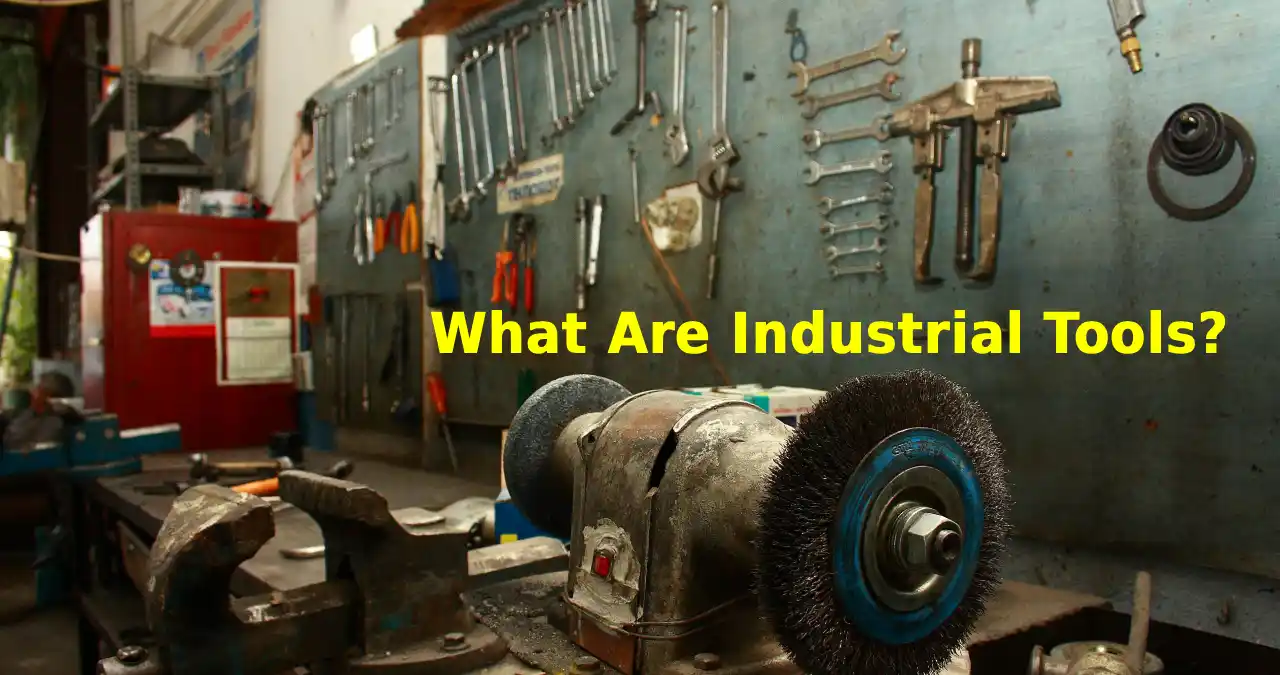
What Are Industrial Tools?
Industrial tools are heavy-duty instruments, machines, and equipment specifically engineered for professional, commercial, and industrial applications. Unlike standard consumer-grade tools found in a typical household toolkit, industrial tools are built to withstand prolonged use, extreme conditions, and high-output demands without compromising on precision or safety.
These tools are designed to perform tasks at a scale and intensity that everyday tools simply cannot handle. They are manufactured to meet strict industry standards — covering everything from material composition and torque output to ergonomic design and safety compliance. In short, industrial tools are purpose-built for environments where performance, reliability, and durability are non-negotiable.
Key distinction: An industrial-grade drill, for example, may feature a significantly higher RPM rating, reinforced housing, and a longer operational duty cycle than its consumer counterpart — making it suitable for use across an entire work shift rather than occasional home repairs.
Main Categories of Industrial Tools
Industrial tools span a wide spectrum of applications and complexity. Understanding the primary categories helps businesses and professionals identify which tools are right for the job. Below are the four foundational categories you need to know.
Hand Tools
Hand tools are the oldest and most fundamental category of industrial tools. These are manually operated instruments that require no external power source and are used across virtually every trade and industry. While simple in concept, industrial-grade hand tools are precision-manufactured from hardened alloys and ergonomic materials to handle daily, heavy-duty use.
Common industrial hand tools include:
- Hammers and mallets — for driving, shaping, and demolition tasks
- Wrenches and torque wrenches — for fastening and loosening bolts to precise specifications
- Screwdrivers and nut drivers — for assembly and disassembly work
- Pliers and grips — for holding, bending, and cutting wire or components
Industrial hand tools are preferred in scenarios where power access is limited, or where fine motor control and tactile feedback are critical — such as electrical panel work or precision mechanical assembly.
Power Tools
Power tools are motor-driven instruments that dramatically increase speed, force, and productivity compared to manual alternatives. In industrial settings, power tools are available in three primary configurations: corded (AC-powered), cordless (battery-powered), and pneumatic (air-powered).
Widely used industrial power tools include:
- Drills and hammer drills — for boring holes into wood, metal, concrete, and masonry
- Angle grinders — for cutting, grinding, and polishing metal surfaces
- Circular saws and reciprocating saws — for rapid cutting of timber, metal, and composites
- Nail guns and staple guns — for high-speed fastening in construction and carpentry
- Impact wrenches — for high-torque fastening in automotive and structural applications
When selecting industrial power tools, factors such as motor power, RPM ratings, battery life (for cordless variants), and heat management are critical considerations. Power tools in industrial environments are typically rated for continuous-duty use — meaning they are built to operate for extended periods without overheating.
Machine Tools
Machine tools represent the most advanced category of industrial tooling and are primarily used in manufacturing, fabrication, and precision engineering environments. These are large, stationary machines that shape, cut, drill, and finish raw materials — typically metal, wood, or composites — to exact specifications.
Key examples of industrial machine tools include:
- Lathes — for rotating workpieces against cutting instruments to produce cylindrical shapes
- Milling machines — for removing material from a workpiece using rotary cutting tools
- CNC (Computer Numerical Control) routers and machining centers — for automated, programmable, high-precision manufacturing
- Drill presses — for accurate vertical drilling at controlled depths
CNC machine tools have transformed modern manufacturing by enabling near-zero-tolerance production at scale. Industries ranging from aerospace to medical devices rely on CNC machining to produce parts that meet tolerances measured in thousandths of an inch.
Cutting & Forming Tools
Cutting and forming tools are specialized instruments used to shape, cut, and manipulate raw materials into finished or semi-finished components. These tools are integral to both manual and machine-assisted manufacturing workflows.
This category includes:
- Drill bits, end mills, and cutting inserts — used in machine tools to remove material
- Dies and punches — for stamping, pressing, and forming sheet metal
- Cutting torches and plasma cutters — for thermal cutting of thick metals
- Taps and dies — for threading holes and rods in metalwork
- Shears and guillotines — for straight-line cutting of sheet materials
The performance of cutting and forming tools directly impacts material waste, production speed, and finished-product quality. Selecting the correct tool geometry and material coating (such as titanium nitride or carbide-tipped edges) is essential for maximizing tool life and cutting efficiency.
Industries That Rely on Industrial Tools
Industrial tools are not confined to a single sector — they are the operational foundation of the world’s largest and most essential industries. Here is a closer look at four major industries and the specific tools that power them.
Construction
The construction industry is one of the heaviest consumers of industrial tools globally. From groundbreaking to finishing work, construction projects demand a diverse arsenal of tools capable of handling harsh outdoor environments, variable materials, and aggressive timelines.
Essential construction industrial tools include jackhammers and rotary hammers for breaking concrete and masonry, concrete mixers and vibrators for poured foundations, laser levels and total stations for site surveying and alignment, scaffolding systems and hoisting equipment for work at elevation, and angle grinders, cut-off wheels, and rebar cutters for steel preparation.
Safety and durability are paramount in construction environments. Industrial tools used on job sites must comply with OSHA standards and often need to meet additional project-specific safety certifications.
Manufacturing
Modern manufacturing is inseparable from industrial tooling. Whether producing automotive components, consumer electronics, or industrial machinery itself, manufacturing facilities depend on precision tools to maintain consistent product quality at scale.
The manufacturing sector relies heavily on CNC machining centers for automated part production, industrial presses and stamping machines for metal forming, robotic welding arms and MIG/TIG welders for assembly, coordinate measuring machines (CMMs) for quality control and inspection, and conveyor-integrated power tools for assembly line operations.
As Industry 4.0 continues to advance, smart industrial tools with embedded sensors, IoT connectivity, and real-time performance monitoring are becoming standard in manufacturing environments — enabling predictive maintenance and reducing unplanned downtime.
Agriculture & Forestry
Agriculture and forestry represent two of the oldest industries in human history — and both have been fundamentally transformed by industrial tools. Modern agricultural and forestry operations rely on mechanized, high-output equipment to maximize yield and reduce manual labor.
The trend toward precision agriculture — using GPS-guided machinery, drone technology, and sensor-equipped implements — is rapidly expanding the definition of industrial tools in this sector.
Automotive
The automotive industry — spanning vehicle manufacturing, repair, and maintenance — is one of the most tool-intensive sectors in the world. Both assembly plants and service workshops depend on a broad range of industrial-grade tools to keep vehicles produced and operational.
Automotive industrial tools must combine high mechanical force with precision — a combination that demands strict quality standards and regular calibration to ensure both accuracy and technician safety.
How to Choose the Right Industrial Tools
Selecting the right industrial tools is a decision that directly impacts productivity, workplace safety, operational costs, and long-term return on investment. Here are the four critical factors to evaluate before making any purchase.
Performance & Power Ratings
The most important starting point is matching a tool’s performance specifications to the demands of your application. Key performance metrics include:
- RPM (Revolutions Per Minute) — higher RPM enables faster cutting, drilling, or grinding but may compromise torque
- Torque (measured in Nm or ft-lbs) — essential for fastening applications where proper tension is critical
- Power source and wattage/amperage — corded tools offer consistent power; cordless tools offer portability; pneumatic tools offer high power-to-weight ratios
- Duty cycle — the percentage of time a tool can operate continuously before requiring a cooldown period
Always match the tool’s rated performance to the upper end of your expected workload — not the average. Industrial tools operating at or beyond their rated limits degrade faster and create safety risks.
Durability & Build Quality
In industrial environments, a tool is only as good as its ability to perform consistently shift after shift, year after year. When assessing durability, prioritize the following:
- Housing materials — look for reinforced magnesium alloy or high-grade composite housings that resist impact and vibration
- Internal components — industrial-grade bearings, brushless motor designs, and sealed gearboxes significantly extend tool life
- IP (Ingress Protection) ratings — tools used in wet, dusty, or outdoor conditions should carry appropriate IP ratings for moisture and dust resistance
- Brand reputation and warranty terms — established manufacturers such as DeWalt, Makita, RIDGID, and Snap-on back their industrial tools with professional warranties and service networks
Total cost of ownership (TCO) is often a better metric than purchase price when evaluating industrial tools. A higher-priced, durable tool that lasts 10 years frequently outperforms a cheaper alternative that requires replacement every two years.
Safety Features
Workplace safety is a legal and moral obligation in every industrial environment. When selecting industrial tools, never compromise on safety features. Look for the following:
- Blade guards and chuck protection — for power tools involving rotating or reciprocating cutting surfaces
- Anti-kickback mechanisms — essential on saws and grinders to prevent sudden, uncontrolled movement
- Ergonomic handles and vibration dampening — to reduce operator fatigue and prevent repetitive strain injuries over long shifts
- Automatic shut-off and overload protection — for tools that may be damaged by overheating or excessive load
- Compliance certifications — look for tools that carry OSHA, CE, UL, or CSA certifications relevant to your market and industry
Before deploying any industrial tool, ensure that operators receive proper training, that appropriate PPE (personal protective equipment) is worn, and that tools are inspected before each use according to manufacturer guidelines.
New vs. Used Industrial Tools
Budget constraints often make the used industrial tool market an attractive option — but this decision deserves careful evaluation. Here is a balanced comparison:
- New tools offer full manufacturer warranties, guaranteed performance specifications, and the latest safety features — ideal for high-frequency, mission-critical applications
- Used tools can offer significant cost savings (often 30–70% below new prices) but require thorough inspection for wear, calibration drift, and safety compliance before purchase
- Certified pre-owned programs offered by major tool distributors provide a middle ground — used tools that have been inspected, refurbished, and re-warranted
- For high-precision tools such as CMMs or CNC machines, always request calibration records and service history before purchasing used equipment
The general rule: for hand tools and basic power tools, used equipment can offer excellent value. For precision machine tools, safety-critical equipment, or tools that directly affect product quality, new or certified-refurbished units are strongly recommended.
Conclusion
Industrial tools are far more than just larger versions of household implements — they are precision-engineered systems designed to meet the rigorous demands of professional industries. From the construction site to the CNC workshop, from agriculture fields to automotive bays, the right industrial tools are what separate efficient, safe operations from costly, dangerous ones.
Understanding what industrial tools are, how they are categorized, where they are used, and how to choose them wisely puts you in a position to make informed decisions — whether you are outfitting a new facility, upgrading an existing toolkit, or simply expanding your knowledge of the trades.
As technology continues to advance, industrial tools are becoming smarter, safer, and more efficient than ever before. Staying informed about the latest developments in industrial tooling is not just good practice — it is a competitive advantage in any field that depends on getting the job done right.
Frequently Asked Questions
Industrial tools are designed for continuous, heavy-duty professional use and are built to significantly higher standards of durability, power, and precision than consumer-grade tools. They typically carry higher performance ratings, longer duty cycles, and stricter safety certifications.
The most commonly used industrial tools are hand tools (wrenches, hammers, screwdrivers), power tools (drills, grinders, saws), and machine tools (lathes, milling machines, CNC routers). The right type depends entirely on the industry and application.
With proper maintenance and within-rated use, high-quality industrial tools can last anywhere from 5 to 20+ years. Regular inspection, lubrication, part replacement, and calibration are key to maximizing tool lifespan.
Many industrial tools can be operated safely by trained non-professionals, but they require proper training, PPE, and adherence to manufacturer guidelines. For complex machine tools or high-voltage equipment, professional certification is strongly recommended.
Industrial tools are available through specialized industrial supply distributors (Grainger, MSC Industrial, Fastenal), manufacturer-direct channels, online B2B marketplaces, and local trade suppliers. Buying from authorized dealers ensures product authenticity and warranty support.